


Operable Window Solutions for Curtain Wall and Storefront Systems While Maintaining Proper Building Aesthetics
Whether new construction or renovation, architects—as well as builders and property owners—may be searching for an operable window in a curtain wall or storefront design. Are you aware that your building can have oversized windows that are operable and look good aesthetically? Yes, we’re talking about natural ventilation for curtain wall and storefront window systems!
Perhaps you’ve seen some window designs addressing the need for ventilation in curtain wall and storefront systems. Sometimes, the traditional window system installed in the storefront looks like multiple windows cobbled together around the entrance with ventilation being a last-minute consideration. In such instances, operable windows are plugged into traditional windows, breaking up the clean sightlines.
There is a solution for this issue. Yes, you can have natural ventilation and pleasing aesthetics with curtain wall and storefront systems. Window ventilation can be attained with certain types of operable windows or by incorporating window ventilation inserts into the window system design. In this blog, we will discuss the need for window ventilation, design options to achieve ideal airflow, and maintaining desired building aesthetics.
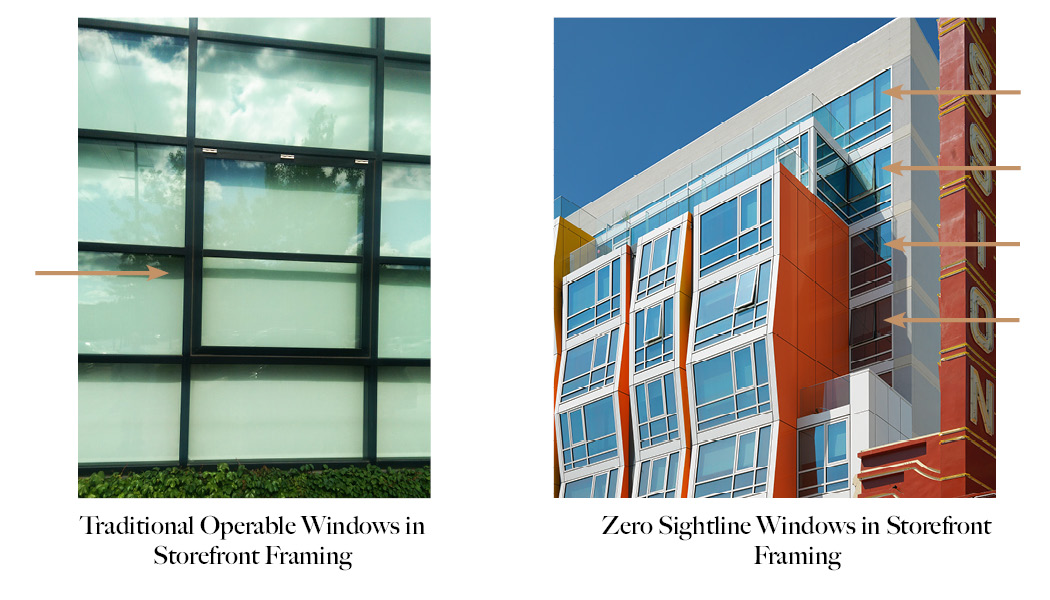
The zig-zag look of San Francisco’s Vida Condominiums is achieved by alternating inward/outward leaning 4” deep unitized window wall units fitted with the Zero Sightline window vent inserts on each floor.
Using Window Ventilation to Enhance Occupant Comfort
We all know the usefulness of windows, which are:
- • Daylighting—eliminating the need for total reliance on electricity for light
- • Airflow—improving indoor air quality through circulation
- • Thermal comfort—changing the environment when it becomes too hot or stuffy
- • Occupant control—the ability to open or close the window as needed
- • Aesthetics—blurring the “walls” of interior / exterior spaces and using windows to complement the building’s design
Perhaps one of the greatest features of windows is their ease and ability to open or close on the whim of the occupant. They provide natural ventilation to exchange indoor air with outdoor air, controlling humidity, removing pollutants, improving air quality, and providing a comfortable environment.
Simply put, windows add form to function, and with so many design styles, trim finishes, and glazing options, architects, builders, and property owners have limitless choices for incorporating windows into a structure.
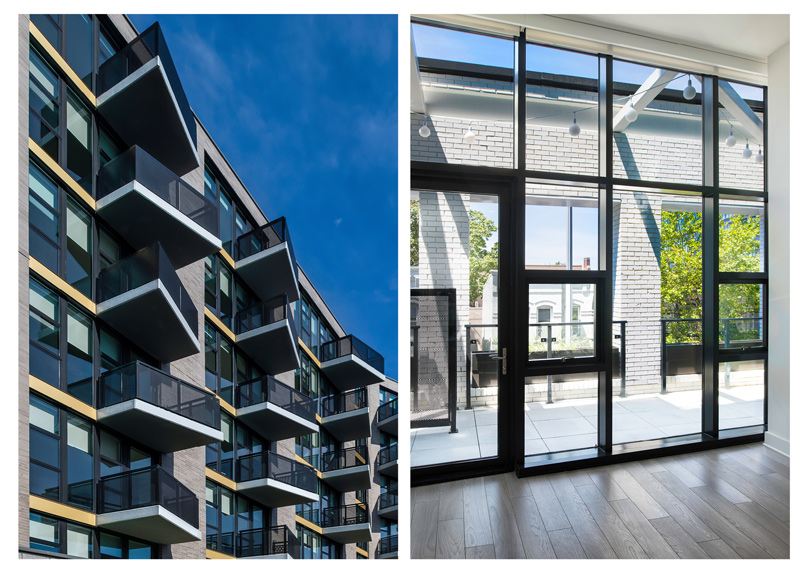
Dark-tinted Zero Sightline windows provide a modern counterpoint to the J•Linea luxury condos built above and back from the pale brick façade of the original building structure.
Window Operability
Let’s talk about window operability. There are different types of window ventilation, with the window itself being the most common or familiar. Windows can open upward, slide to the side, or project in/out—all great selections for creating airflow. They can be opened fully, partially, or just a little by occupants to achieve the desired airflow. These types of windows are single or double hung, sliding, casement, or project in/out, and they best serve defined openings within a limited range. They can be placed together for larger openings; however, in those instances, curtain wall or storefront windows are usually the better design option.
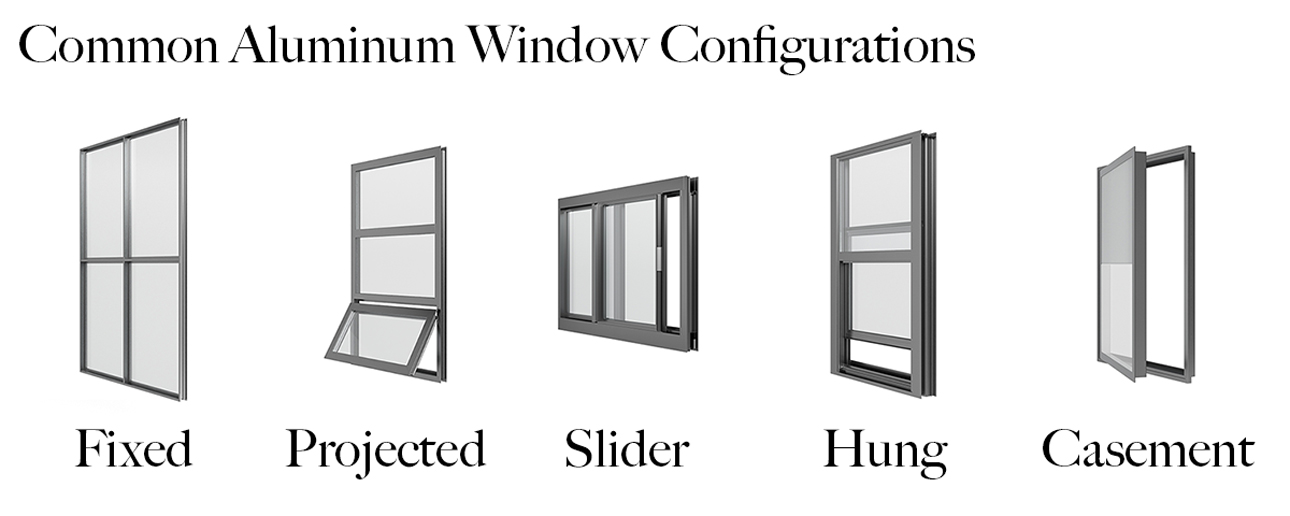
Casement or projected windows are the only operable windows recommended for use with curtain wall and storefront window systems. Both open on a hinge, but the biggest difference is the axis of that hinge. A casement window is hinged on one side to swing open vertically, whereas a projected window is hinged at the top or bottom to open horizontally.
For larger buildings such as retail stores, restaurants, office space or commercial businesses, education, healthcare, hospitality, or apartment buildings, curtainwall and storefront windows are ideal. These windows better fit the scale of the structure, provide abundant daylighting, and ensure a clean aesthetic that matches the overall look of the building. However, curtainwall and most storefront windows are static, meaning they cannot be opened.
So, what about operability? Larger structures need ventilation, but oversized windows may be too large or too heavy to open, slide, or push out. There is a solution for this issue. To maintain appropriate building aesthetics, ventilation can be placed alongside the perimeter of the window design such as at the top, the side, or even the bottom. Such placement provides the operability needed while maintaining the desired open views of the curtain wall or storefront window.
Window Vent Inserts
Now we’re talking about window-integrated ventilation, also known as “window vent inserts.” A window vent is a general term for an opening designed to allow airflow through a window, while a window vent insert is a specific product that fits into an existing window or doorframe to provide ventilation or function. Window vent inserts can be used to vent portable air conditioners, allow for air circulation, or even replace glass in entry doors.
Windows designed with a vent insert provide operability to curtain wall and storefront windows without impacting or changing the window’s design integrity. It’s the perfect solution for architects and building owners who want to provide unobstructed views and the ability to control airflow without sacrificing thermal performance in storefront or curtain wall projects.
The Impact of Window Sightlines on Building Aesthetics
Architects have several window design options available to them. When it comes to aesthetics, framing the view is just as important as the view itself. Referred to as sightline in fenestration terms, the narrower the surrounding frame, the better the aesthetics. Most window manufacturers offer Narrow Sightline Windows, which, as expected, have a thin frame. Architects also have the option of Zero Sightline Windows, which provide no frame for a frameless look.
Zero Sightline Windows are the design element architects desire to achieve a connection between a structure’s interior with the surrounding exterior environment. They help blur the distinction between indoor and outdoor spaces, creating a feeling of openness or unrestricted space for occupants.
Zero sightline vents are operable windows designed to be nearly invisible and seamlessly integrate into a building's glass facade, such as a curtain wall or window wall system. When closed, their concealed frames and minimal visible components give the appearance of a fixed, uninterrupted sheet of glass.
A combination of architectural and engineering techniques is used to achieve the clean look of the zero sightline, such as:
- • Minimized exterior frame is designed to be flush with the adjoining glass while a small gasket around the vent’s edge helps create a shadow line like the glazing. This also improves the thermal efficiency of the window system with minimal framing exposed to the exterior environment.
- • Structural silicone glazing is used on the perimeter of the insulated glass units to conceal the frame. This allows the vent to be glazed directly into the pockets of the curtainwall for a seamless look.
- • Concealed hardware, such as hinges and locks, is hidden from view to maintain the clean, uninterrupted appearance.
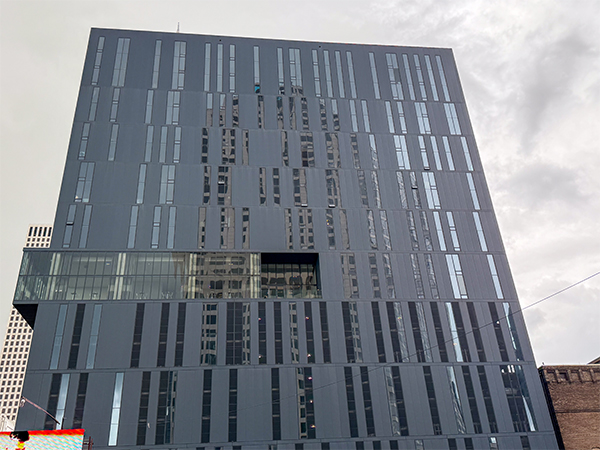
What makes the design of the 930 Poydras Apartments in New Orleans stand out is the unique, random pattern of tinted, low-E glass Zero Sightline vent windows set in blue frames amid gray steel panels.
Winco’s Zero Sightline Windows
Winco has its own version of the Zero Sightline Window in our 3325CW Series, designed for Curtain Wall, and 3325SF designed for Storefront systems, which are only available in prefabricated and pre-glazed configurations for ease of installation and ensured minimal sightlines. Our AAMA-rated, thermally broken window vent insert features a 2" deep frame depth with a 1-1/4" proud vent for zero sightline glazing of 1" insulated glass and can be glazed into any storefront or curtain wall framing system.
This operable window is available in a project-out awning or project-out casement for the look and performance your project deserves. These options offer maximum design flexibility and overall improved aesthetics.
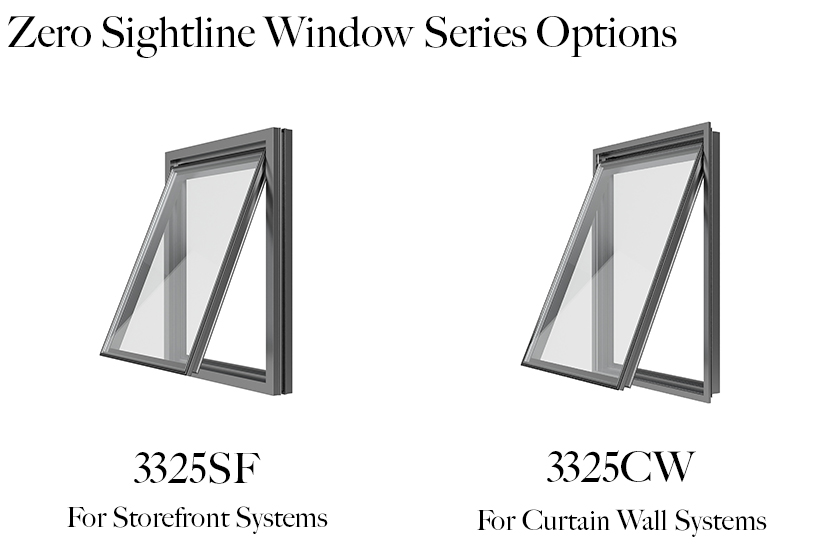
Zero Sightline Windows can make a stunning contribution to any building project. Architects will find that Zero Sightline Windows provide the functionality, daylighting, airflow, occupant comfort and control, and overall building aesthetics they have been searching for.
To see more zero sightline project window designs, click here. Or, if you’re ready to get started, find your local representative today!